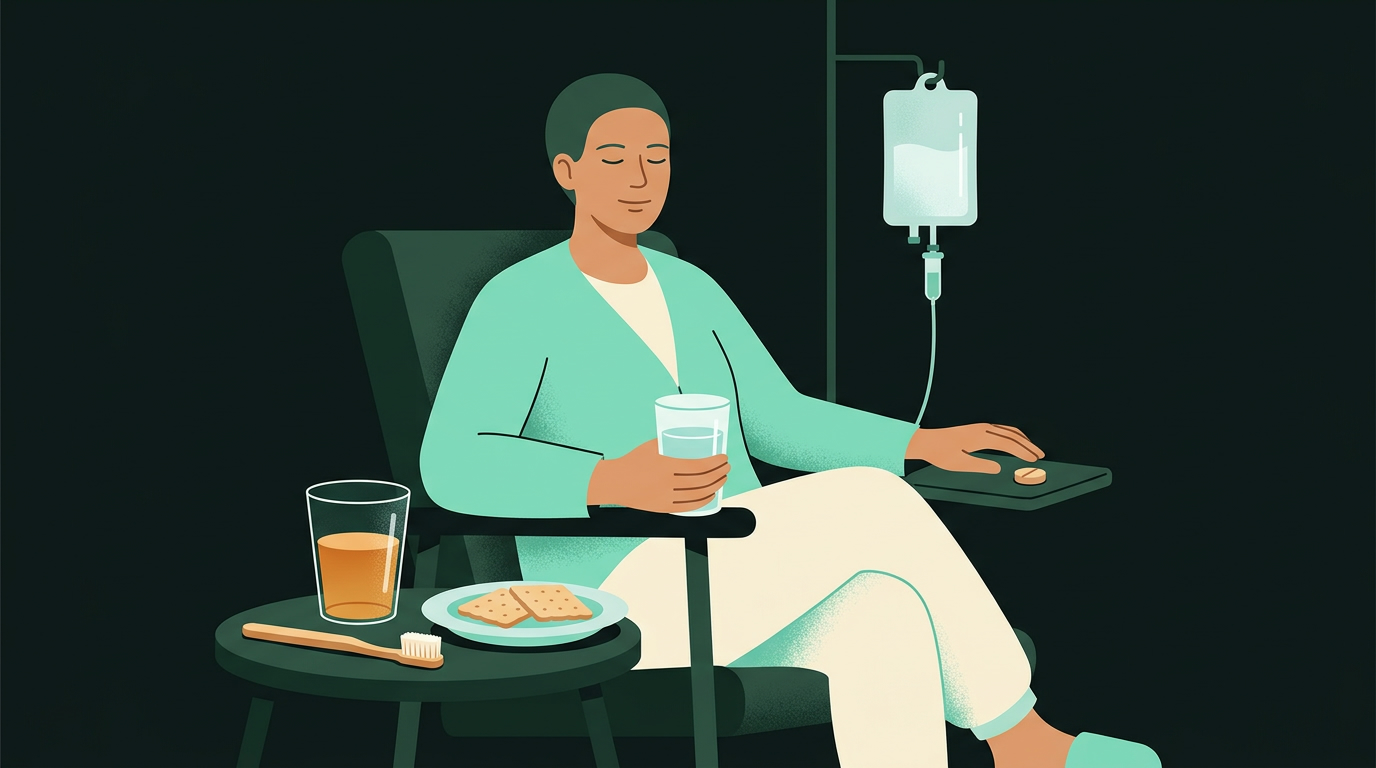
When people imagine chemotherapy, many picture someone being violently sick. That image comes from a time when there were few good anti-sickness medicines. Today, for most people, nausea is something we can largely prevent. Not always perfectly, but far better than many expect.
Mouth sores are less talked about, but they can make eating and drinking painful, and they matter for the same reason nausea does: a person who cannot eat or drink well becomes weaker and dehydrated. This guide covers both, with practical steps you can take at home.
Part 1: Nausea and vomiting
The three kinds of chemotherapy nausea
- Acute: starts within the first 24 hours after treatment.
- Delayed: starts or continues from about one to seven days after treatment. Many people expect sickness only on the day of chemotherapy and are caught off guard by this.
- Anticipatory: starts before a treatment, triggered by the sights, smells or sounds of the treatment room after a previous difficult experience. Preventing nausea well from the very first cycle is the best way to avoid it.
How likely nausea is depends heavily on which chemotherapy drugs you have. Some cause very little; others cause a lot without prevention. Your team chooses your anti-sickness plan based on this.
Anti-sickness medicines: the key is timing
Modern anti-sickness medicines (antiemetics) work best when they stop nausea before it starts. That is why they are often given before your chemotherapy and prescribed for the following days. Depending on your treatment, your plan may include medicines from several groups, for example:
- Serotonin blockers, such as ondansetron or granisetron
- NK-1 receptor blockers, such as aprepitant
- Steroids, such as dexamethasone
- Olanzapine
- Dopamine blockers, such as metoclopramide or prochlorperazine
These are examples, not a recommendation; your team decides which, if any, are right for you. The most important practical points are:
- Take them exactly as prescribed, including on days you feel fine. Skipping doses because you "aren't sick yet" is one of the commonest reasons nausea gets out of control.
- Know which tablet is your "rescue" medicine for breakthrough nausea, and when you can take it.
- Tell your team if your plan isn't working. There are many combinations. If one doesn't work, the next cycle's plan can usually be changed.
- Check before taking any supplement or herbal remedy for nausea, as some can interact with treatment.
Eating and drinking when you feel sick
- Eat small amounts often: five or six small meals or snacks rather than three large ones.
- Choose plain, bland or starchy foods, such as toast, rice, crackers or plain bread. Cold or room-temperature foods smell less than hot ones.
- Avoid greasy, fried, very sweet or spicy foods if they upset your stomach.
- Sip fluids through the day: water, clear soups, diluted juice. Small sips are easier than large drinks.
- Avoid strong smells: eat in a well-ventilated room, and let someone else cook if possible.
- Rest sitting up, or with your head raised, for about 30 minutes after eating.
- Keep a simple diary of when nausea happens and what came before it; it helps your team adjust your plan.
Ginger, relaxation techniques and acupressure wristbands help some people. Mention anything you try to your team. Our guide to eating during cancer treatment has more on nutrition.
When nausea or vomiting needs a call
Contact your team the same day if:
- You cannot keep fluids or your medicines down
- You are vomiting repeatedly despite taking your anti-sickness medicines
- You feel dizzy, weak or confused, or are passing very little urine, which are signs of dehydration
- You are losing weight because you cannot eat
Part 2: Mouth sores and a sore mouth
Why they happen
The lining of your mouth renews itself quickly, so some chemotherapy drugs, and radiotherapy to the head and neck, can damage it. This can cause mouth sores (mucositis), soreness, sensitivity to hot or cold food, taste changes, dry mouth and difficulty swallowing. When the white cell count is low, the mouth is also more prone to infection.
Daily mouth care
- Brush gently after meals and at bedtime with a very soft toothbrush. If brushing is too painful, ask about alternatives such as soft swabs.
- Rinse regularly through the day. A simple rinse of warm water with a little salt and baking soda is commonly recommended; ask your nurse for the exact recipe they use. Avoid mouthwashes that contain alcohol.
- Check your mouth every day in a mirror for sores, red areas or white patches.
- Ask before flossing if your blood counts are low, because of the risk of bleeding.
- Keep your lips moist, and if you wear dentures, keep them clean and take them out when they rub.
- Avoid smoking and alcohol, which irritate a sore mouth.
Eating with a sore mouth
- Choose soft, moist foods: yoghurt, soups, eggs, well-cooked rice, mashed vegetables. Add sauce or gravy to drier foods.
- Avoid foods that sting or scratch: crunchy, salty, spicy, acidic or very sugary foods.
- Let hot food cool to warm or room temperature.
- Blend foods or make smoothies if swallowing is hard.
- For a dry mouth, sip water often, and ask about sugar-free gum or sweets, or saliva substitutes.
Your team can also prescribe treatments for pain, including numbing rinses, and treat any infection.
When a sore mouth needs a call
- Pain in your mouth, lips or throat that stops you eating, drinking or sleeping
- White patches or a white coating in your mouth, which can be a sign of infection
- A temperature of 38°C or higher: during chemotherapy this is urgent. Read our guide to fever during chemotherapy.
In an emergency, call 997.
You don't have to just put up with it
Many patients quietly tolerate nausea or a painful mouth because they think it is simply "part of chemo", or they don't want to complain. Please don't. These are among the side effects we can do the most about, and keeping you eating, drinking and comfortable helps you get through your treatment as planned.
For a wider overview, read our guide to cancer treatment side effects. If you are having radiotherapy, see radiotherapy side effects, and if you are on immunotherapy, see how immunotherapy side effects differ. You can learn more about the doctor behind this site here.
Frequently asked questions
Should I take my anti-sickness medicine even if I don't feel sick?
Yes, if your team has prescribed it on a schedule. Anti-sickness medicines work best when they prevent nausea before it starts, so they are often taken before treatment and for a few days afterwards. Don't wait until you feel sick, and don't stop early without asking your team.
How long does nausea last after chemotherapy?
Nausea within the first 24 hours is called acute nausea. Delayed nausea can start or continue from about day one to day seven after treatment. Chemotherapy-related nausea often lasts a day or two, but can last up to a week. Tell your team if it is not controlled.
What can I eat when I feel nauseous during chemo?
Small, frequent meals of plain, bland or starchy foods, such as toast, rice or crackers, are often easiest. Cold foods smell less. Sip fluids through the day, avoid greasy, fried, very sweet or spicy foods, and rest sitting upright after eating.
How should I clean my teeth if I have mouth sores?
Brush gently after meals and at bedtime with a very soft toothbrush, rinse your mouth regularly with a simple rinse your team recommends, and check your mouth daily for sores or white patches. Ask your team before flossing if your blood counts are low.
When are mouth sores a reason to call my team?
Call your team if mouth or throat pain stops you eating, drinking or sleeping, if you see white patches, or if you have a temperature of 38°C or higher. During chemotherapy, a fever needs urgent attention.
Sources
- National Cancer Institute. Nausea and Vomiting and Cancer Treatment. https://www.cancer.gov/about-cancer/treatment/side-effects/nausea
- National Cancer Institute. Mouth and Throat Problems during Cancer Treatment. https://www.cancer.gov/about-cancer/treatment/side-effects/mouth-throat
- Hesketh PJ, et al. Antiemetics: ASCO Guideline Update. J Clin Oncol. 2020;38(24):2782-2797. doi:10.1200/JCO.20.01296
Last reviewed: November 22, 2026
Medical guidance changes; check the latest official recommendations.
This website provides general educational information only. It is not medical advice, diagnosis, or treatment, and it does not create a doctor-patient relationship. Consult a qualified healthcare professional about your own condition. In an emergency, call 997.