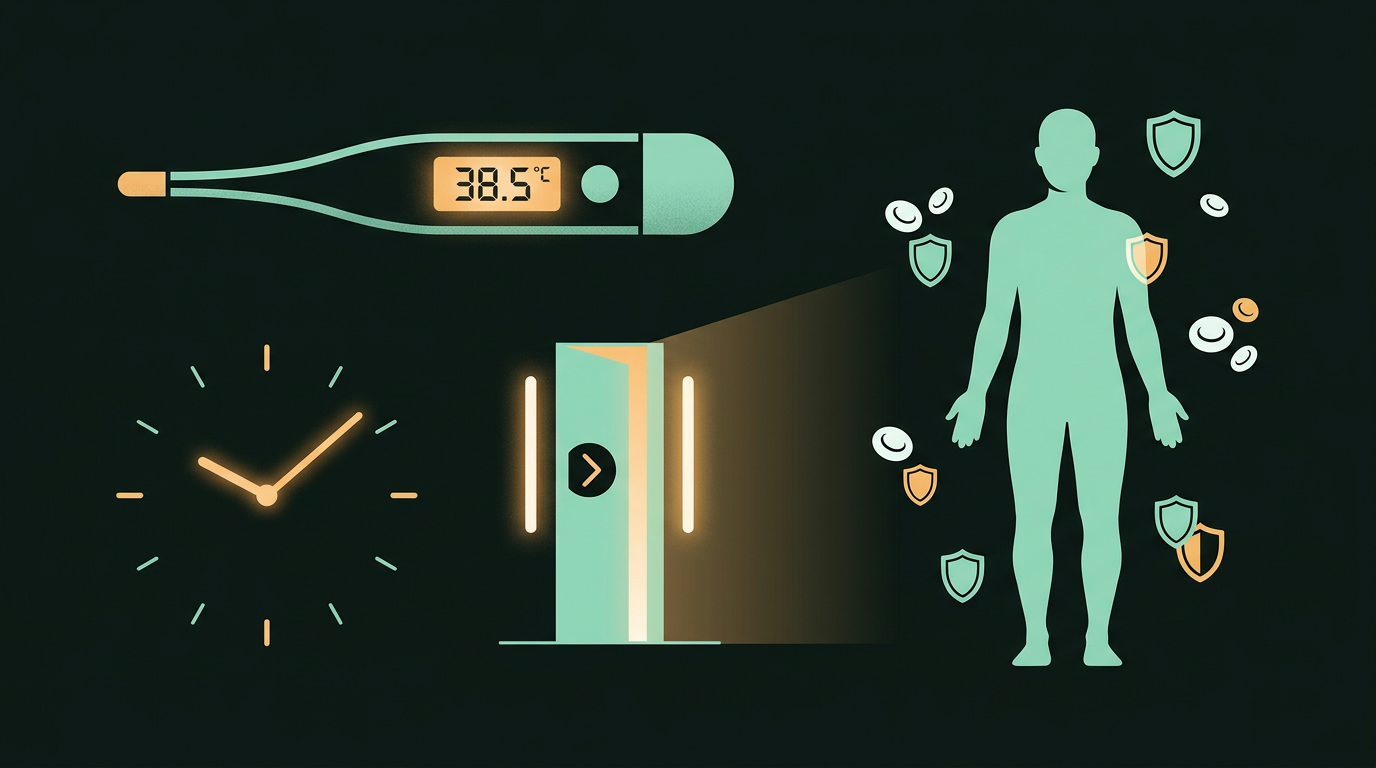
If there is one side effect of chemotherapy I want every patient and family to take seriously, it is not hair loss or nausea. It is a fever.
In everyday life, a raised temperature usually means a cold that will pass with rest. During chemotherapy, the same temperature can be the first and sometimes the only sign of a serious infection. Handled quickly, these infections are usually treated well. Handled late, they can become life-threatening within hours.
The good news is that this is one of the most preventable emergencies in cancer care. What makes the difference is simple: knowing what counts as a fever, and acting on it straight away.
Why a fever matters so much during chemotherapy
Chemotherapy works by attacking cells that divide quickly. Cancer cells divide quickly, but so do the cells in your bone marrow that make white blood cells. One type, the neutrophil, is your body's first line of defence against bacteria.
After many chemotherapy treatments, the neutrophil count falls for a period. This is called neutropenia. It is expected, it is temporary, and your team checks it with blood tests. But while the count is low, two things change:
- Infections can spread faster, because there are fewer cells to stop them.
- The usual warning signs may be faint. Redness, swelling and pus are partly made by white blood cells, so with fewer of them, a fever may be the only clue that something is wrong.
That is why cancer teams call fever with a low neutrophil count (febrile neutropenia) an emergency. It is not because something has gone wrong with your treatment. It is because infections at this stage respond best to antibiotics started early.
What counts as a fever?
Most cancer teams use a temperature of 38°C (about 100.4°F) or higher. Your own team may give you a slightly different number. Write theirs down and follow it.
- Use a thermometer. Feeling hot to the touch is not reliable.
- Check your temperature whenever you feel warm, flushed, shivery or simply unwell, even if you think it is "nothing".
- Do not take paracetamol, ibuprofen or aspirin to bring the fever down before speaking to your team. These can mask a fever and delay the assessment you need.
What to do if you have a fever
- Check again with the thermometer to confirm the reading.
- Call your cancer team straight away, on the number they gave you for urgent problems, including at night and at weekends. Do not wait for your next appointment or for the morning.
- If you cannot reach them, or you feel very unwell, go to the nearest emergency department. If you are dizzy, confused, short of breath, or collapsing, call 997.
- Tell every doctor and nurse you see that you are having chemotherapy, and when your last treatment was. This changes how quickly they act.
Calling and being told it is a false alarm is a good outcome. No cancer team wants you to "not bother them". They would far rather see you early.
Other signs of infection to report
Even without a fever, tell your team promptly if you notice:
- Shivering, chills or sweating
- A new cough, sore throat, or shortness of breath
- Diarrhoea
- Ear pain, headache, sinus pain, or a stiff or sore neck
- A new skin rash
- Mouth or tongue sores, or a white coating in the mouth
- Redness, swelling or pain around a cut, or where a line or catheter goes into your body
- Burning or pain when passing urine, or cloudy or bloody urine
- Soreness or bleeding around the back passage
What happens when you get to hospital
Knowing what to expect can make a stressful night easier. Usually, the team will:
- Check your temperature, pulse, blood pressure and breathing.
- Take blood tests, including your white cell count, and samples to look for the infection (blood cultures, and sometimes urine or a swab).
- Start antibiotics quickly. International guidance recommends that people with fever and a low neutrophil count receive their first dose of antibiotics within one hour of arriving. Antibiotics are often started before all the test results are back, because waiting costs time.
Some people at lower risk can be treated with antibiotic tablets at home after a period of observation; others need to stay in hospital for antibiotics through a drip. Your team decides this based on your condition and test results.
Be ready before it happens
Most fevers do not happen at a convenient time. A little preparation now makes the right decision easy later:
- Keep a working thermometer at home, and know how to use it.
- Save your team's daytime and out-of-hours numbers in your phone and on paper by the bed. Make sure a family member has them too.
- Ask when your white cell count is likely to be lowest after each cycle, so you know when to be most alert.
- Keep a short note of your diagnosis, treatment, and date of last chemotherapy to show emergency staff.
- Plan how you would get to hospital at night, and who would go with you.
Everyday ways to lower your risk
- Wash your hands often with soap and water, and ask the people around you to do the same.
- Stay away from people who are unwell, and avoid crowds when your counts are low.
- Follow food-safety advice: cook meat, fish and eggs thoroughly, and wash raw fruit and vegetables well. Your team may give you more specific food advice. Our guide to eating during cancer treatment covers the basics.
- Look after your mouth (see our guide to mouth sores during chemotherapy), and keep any catheter site clean and dry.
- Clean any cuts or scrapes straight away.
For some treatments, your team may also give medicines to help prevent infection or to help your white cell count recover faster. Whether you need these depends on your treatment, so ask whether they apply to you.
A fever is a reason to act, not a reason to panic
Fever during chemotherapy is common, and most people who are treated promptly recover and continue their treatment. It does not mean the chemotherapy has failed, and it is not something you caused. The one mistake to avoid is waiting.
If you want a wider picture of what treatment can feel like, read our overview of cancer treatment side effects and how they are managed. And if anything in this article doesn't match what your own team has told you, follow your team: they know your treatment. You can read more about the doctor behind this site here.
Frequently asked questions
What temperature counts as a fever during chemotherapy?
Most cancer teams treat a temperature of 38°C (about 100.4°F) or higher as a fever that needs an urgent call. Your own team may give you a slightly different number; always follow the threshold they give you.
Should I take paracetamol if I get a fever during chemo?
Speak to your cancer team before taking any medicine to bring the temperature down. Fever-lowering medicines can hide a fever and delay assessment of a serious infection.
Can I wait until the morning if the fever starts at night?
No. A fever during chemotherapy should be reported straight away, at any hour. Use your team's out-of-hours number, go to the nearest emergency department, or call 997 if you are very unwell.
Why is infection more dangerous during chemotherapy?
Many chemotherapy drugs temporarily lower the number of neutrophils, the white blood cells that fight bacteria. With fewer neutrophils, an infection can spread quickly, and the usual warning signs such as redness or pus may be faint.
How can I lower my risk of infection during chemotherapy?
Wash your hands often, ask people around you to do the same, avoid people who are sick, follow food-safety advice, look after your mouth and any catheter site, and ask your team when your white cell count is likely to be lowest.
Sources
- Centers for Disease Control and Prevention. Preventing Infections in Cancer Patients — information for patients. https://www.cdc.gov/cancer-preventing-infections/patients/index.html
- National Cancer Institute. Infection and Neutropenia during Cancer Treatment. https://www.cancer.gov/about-cancer/treatment/side-effects/infection
- Taplitz RA, et al. Outpatient Management of Fever and Neutropenia in Adults Treated for Malignancy: American Society of Clinical Oncology and Infectious Diseases Society of America Clinical Practice Guideline Update. J Clin Oncol. 2018;36(14):1443-1453. doi:10.1200/JCO.2017.77.6211
Last reviewed: November 22, 2026
Medical guidance changes; check the latest official recommendations.
This website provides general educational information only. It is not medical advice, diagnosis, or treatment, and it does not create a doctor-patient relationship. Consult a qualified healthcare professional about your own condition. In an emergency, call 997.