Many patients who start immunotherapy come in expecting the side effects they have heard about from chemotherapy: hair loss, vomiting, low blood counts. Often, those never come. Some people feel so well that they start to wonder whether the treatment is doing anything at all.
But immunotherapy has its own set of side effects. They are less predictable, they can affect almost any part of the body, and they can appear late, sometimes after treatment has stopped. Most are mild and manageable. The ones that become serious are usually the ones that were reported late.
This guide focuses on the most widely used type of immunotherapy, immune checkpoint inhibitors. Your team can tell you whether this is the type you are receiving.
Why immunotherapy side effects are different
Your immune system has built-in "brakes", called checkpoints, that stop it from attacking your own healthy tissue. Some cancers use these brakes to hide from the immune system. Checkpoint inhibitors release those brakes so your immune cells can recognise and attack the cancer.
The trade-off is that a released immune system can sometimes become over-active against healthy organs too. This causes inflammation, and doctors call these problems immune-related side effects. In other words:
- Chemotherapy side effects mostly come from damage to fast-growing healthy cells, such as hair roots, the gut lining and the bone marrow.
- Immunotherapy side effects mostly come from your own immune system inflaming a healthy organ.
This is also why some familiar chemotherapy problems are less common. For example, international guidance does not recommend routine anti-sickness medicine for people having checkpoint inhibitors on their own, because nausea is much less of a problem than with many chemotherapies. If immunotherapy is given together with chemotherapy, you can still get the chemotherapy side effects. Our guide to cancer treatment side effects covers those.
Which parts of the body can be affected
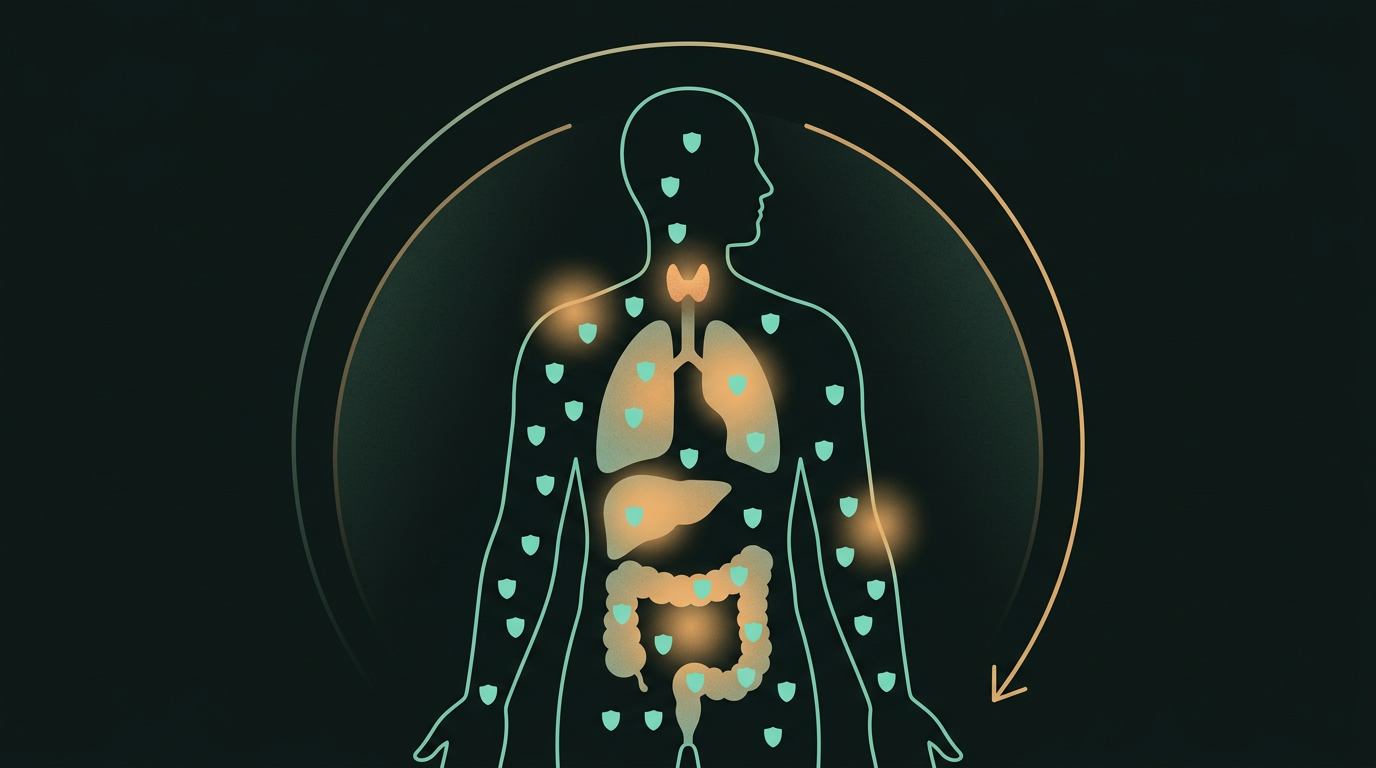
Immune-related side effects can happen almost anywhere. These are the areas most often discussed, and the symptoms worth reporting:
- Skin: rash, itching, or changes in skin colour.
- Bowel (colitis): diarrhoea, more frequent bowel movements than usual, tummy pain, or blood or mucus in the stool.
- Lungs (pneumonitis): a new cough, chest pain, or shortness of breath.
- Liver (hepatitis): often found on routine blood tests before you notice anything. Sometimes it causes yellowing of the skin or eyes, dark urine, or pain on the right side of the tummy.
- Hormone glands (thyroid, pituitary, adrenal glands, pancreas): unusual tiredness, feeling too hot or too cold, weight change, headaches, dizziness, or, rarely, high blood sugar with thirst and passing a lot of urine.
- Kidneys: usually picked up on blood tests.
- Less common but important: the heart (chest pain, palpitations, breathlessness), and the nerves and muscles (new weakness, numbness, drooping eyelids, or trouble breathing). These are rare but need urgent attention.
Some people also have flu-like symptoms or tiredness, especially early on.
Timing: why "it's been months, so it can't be the treatment" is a trap
Chemotherapy side effects tend to follow a pattern around each cycle. Immunotherapy side effects do not. They can appear after the first dose, after many months of treatment, or even after treatment has finished. Doctors cannot predict in advance who will get them or when.
This has two practical consequences:
- Never assume a new symptom is unrelated just because you have been on treatment a long time without problems.
- Tell every doctor you see that you have had immunotherapy, including emergency doctors and your family doctor, even after treatment ends. Ask your team whether they can give you a wallet card or written summary to carry.
How these side effects are managed
Management depends on which organ is involved and how severe the problem is. International guidelines follow a broadly similar approach:
- Mild side effects: immunotherapy can usually continue, with closer monitoring and treatment of the symptoms.
- Moderate side effects: immunotherapy is often paused. Steroid medicines may be given to calm the immune system, and treatment may restart once the problem has settled.
- Severe side effects: immunotherapy is stopped, and high-dose steroids are started, sometimes in hospital. Steroids are usually reduced slowly, over at least four to six weeks, to stop the inflammation coming back. A small number of people need other immune-calming medicines.
- Hormone problems: if a gland such as the thyroid stops working properly, the missing hormone can usually be replaced with tablets, and immunotherapy can often continue.
The earlier a problem is found, the more likely it is to be mild and quick to settle. That is the whole reason early reporting matters.
What you can do
- Report new symptoms early, even ones that seem minor, such as a few extra loose stools a day, a new cough, or unusual tiredness. Don't wait until your next appointment.
- Check with your team before treating symptoms yourself. Anti-diarrhoea medicines or skin creams bought over the counter can hide a problem that needs proper assessment.
- Keep your blood test appointments. Some side effects, especially in the liver, kidneys and thyroid, are found on blood tests before you feel anything.
- Know when it is urgent. Severe diarrhoea, blood in the stool, breathlessness, chest pain, confusion, severe headache, or new weakness need same-day attention. In an emergency, call 997.
- Keep a simple symptom diary, noting what happened and when, to bring to your appointments.
Feeling well is common, and so is speaking up
Many people on immunotherapy live their normal lives during treatment, and most side effects, when they happen, are mild and treatable. You do not need to be anxious about every small change. You only need to keep your team informed. If in doubt, call. It costs a phone call, and it can save weeks of illness.
If you are also having chemotherapy, read our guides to fever during chemotherapy and nausea and mouth sores. You can learn more about the doctor behind this site here.
Frequently asked questions
Are immunotherapy side effects the same as chemotherapy side effects?
No. Chemotherapy side effects come mainly from damage to fast-growing healthy cells. Immunotherapy side effects come from the immune system becoming over-active and causing inflammation in healthy organs, such as the skin, bowel, lungs, liver or hormone glands.
Can immunotherapy side effects start after treatment has finished?
Yes. Side effects can appear at any point during treatment and also after it ends. Tell any doctor you see that you have had immunotherapy, even months later.
How are immunotherapy side effects treated?
It depends on how severe they are and which organ is affected. Mild problems are often watched closely while treatment continues. More serious ones may mean pausing immunotherapy and taking steroid medicines to calm the immune system, usually tapered off over several weeks.
If immunotherapy affects my thyroid, is it permanent?
Sometimes the thyroid or another hormone gland does not recover. When that happens, the missing hormone can usually be replaced with daily tablets, and in many cases immunotherapy can continue.
Can I treat diarrhoea or a rash from immunotherapy myself?
Tell your cancer team before treating it yourself. Diarrhoea or a rash during immunotherapy can be an early sign of immune-related inflammation that needs assessment, and over-the-counter treatments can hide how serious it is.
Sources
- National Cancer Institute. Immunotherapy Side Effects. https://www.cancer.gov/about-cancer/treatment/types/immunotherapy/side-effects
- National Cancer Institute. Immune Checkpoint Inhibitors. https://www.cancer.gov/about-cancer/treatment/types/immunotherapy/checkpoint-inhibitors
- Schneider BJ, et al. Management of Immune-Related Adverse Events in Patients Treated With Immune Checkpoint Inhibitor Therapy: ASCO Guideline Update. J Clin Oncol. 2021;39(36):4073-4126. doi:10.1200/JCO.21.01440
- Hesketh PJ, et al. Antiemetics: ASCO Guideline Update. J Clin Oncol. 2020;38(24):2782-2797. doi:10.1200/JCO.20.01296
Last reviewed: November 22, 2026
Medical guidance changes; check the latest official recommendations.
This website provides general educational information only. It is not medical advice, diagnosis, or treatment, and it does not create a doctor-patient relationship. Consult a qualified healthcare professional about your own condition. In an emergency, call 997.