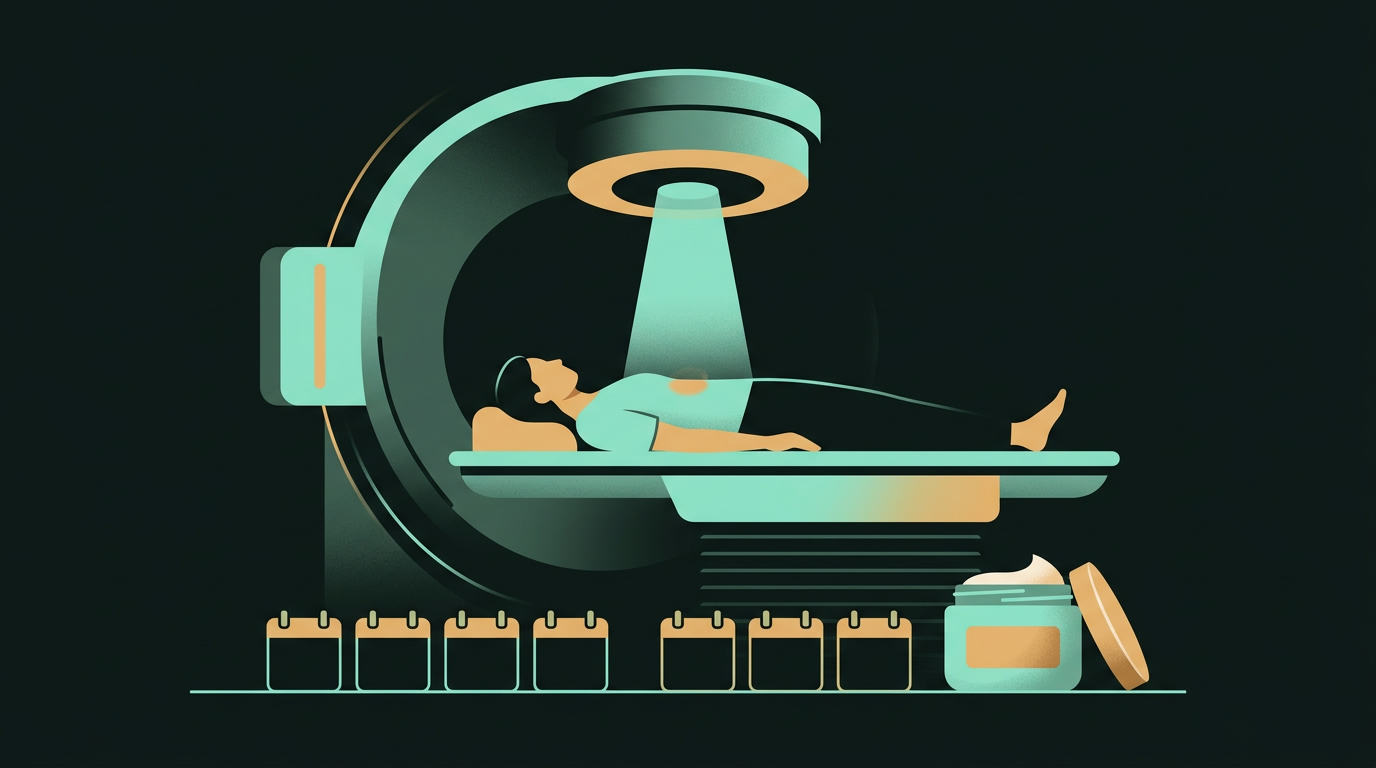
For many people, the word "radiation" brings up frightening images: burns, glowing patients, being kept away from family. The reality in a modern radiotherapy department is very different. Most people walk in, lie still for a few minutes, and walk out again. Many keep working, driving and looking after their families throughout treatment.
Radiotherapy does have side effects, and they can be tiring and uncomfortable. But they follow a much more predictable pattern than many people expect, and the most important rule is simple: side effects depend mostly on the part of the body being treated.
What a treatment session is actually like
- You won't feel it. You cannot feel, see, hear or smell the radiation as it is delivered.
- The treatment itself is short. The radiation is usually given over about one to five minutes. Most of a visit, often 30 minutes to an hour, is spent getting you into exactly the right position.
- It is usually daily. Many people have treatment once a day, Monday to Friday, for a number of weeks. The total number depends on the type of cancer and the aim of treatment. Some specialised treatments, such as stereotactic radiotherapy, are given in just one to five sessions.
- You are not radioactive. External beam radiotherapy, the most common type, does not make you radioactive. You can hug your children and grandchildren, and be around pregnant women, safely.
The golden rule: side effects happen where the radiation goes
Chemotherapy travels through the whole body. Most radiotherapy is aimed at one area, so its side effects are mainly local. That is why two people having radiotherapy can have completely different experiences. A rough guide:
- Head and neck: sore mouth and throat, dry mouth, taste changes, difficulty swallowing, skin changes, and later, sometimes an underactive thyroid.
- Brain: tiredness, hair loss in the treated area, headache, nausea, and problems with memory or concentration.
- Chest: difficulty or discomfort swallowing, cough, shortness of breath, and skin changes.
- Breast: skin changes, tenderness and swelling of the breast.
- Abdomen (tummy): nausea, vomiting and diarrhoea.
- Pelvis and rectum: diarrhoea, bladder and urinary problems, and effects on sexual function and fertility in both men and women.
Hair loss happens only in the area being treated. Radiotherapy to the breast, for example, does not make the hair on your head fall out. Before you start, ask your team: "Which side effects should I expect for the area you are treating?"
Tiredness: the side effect almost everyone notices
Fatigue is the most common general side effect of radiotherapy. It often builds gradually, increasing until about halfway through treatment and then staying about the same until the end. Daily travel to treatment adds to it. It usually improves after treatment finishes, although for some people it lingers for weeks or months.
- Plan your energy. Do the things that matter most to you at the times of day you feel best.
- Rest, but not too much. Short naps of less than an hour can help. Long daytime sleeps can make it harder to sleep at night.
- Keep gently active. Regular light activity, such as walking, can actually improve energy during and after treatment. Ask your team what level is right for you.
- Accept help with lifts, meals and chores during the busiest weeks.
Skin care during radiotherapy
The skin in the treated area may gradually become dry, itchy, red or darker, a little like sunburn. It may peel, and in skin folds, such as under the breast, around the ears or between the buttocks, it can sometimes become raw and moist. Good care makes a real difference:
- Wash gently with lukewarm water and a mild soap, and pat dry rather than rubbing. Short showers are better than long hot baths.
- Use only the products your team recommends, and ask before applying anything else to the area, including creams, powders, deodorants, perfumes or anything containing alcohol.
- Avoid heat and cold on the treated skin: no heating pads, hot water bottles or ice packs, and avoid sticky plasters or tape there.
- Wear loose, soft clothing over the area.
- Protect the area from the sun with clothing and shade, both during treatment and afterwards. Ask your team which sunscreen to use.
- If you shave in the treated area, ask whether to stop, or use an electric razor.
Tell your team if you notice blisters, broken or weeping skin, painful sores, or signs of infection. They can give you dressings or creams, and sometimes adjust your care.
Early effects and late effects
Doctors divide radiotherapy side effects into two groups:
- Early effects happen during treatment or soon after it. Healthy cells usually recover, and most early effects settle within a few months.
- Late effects can appear months or even years later. Whether you get any, and which ones, depends on the area treated, the dose, other treatments you have had, and individual factors such as smoking.
Late effects are one reason follow-up appointments matter. Ask your team which late effects, if any, you should watch for, and who to contact about them years from now.
When to call your team
Your radiotherapy team sees you often, so mention problems at your daily visits. Call sooner, even between visits, if you have:
- Pain or soreness that stops you eating, drinking or sleeping
- Diarrhoea or vomiting that does not settle, or signs of dehydration such as dizziness or very little urine
- Broken, blistered or weeping skin, or skin that looks infected
- Increasing shortness of breath, or a new cough
- A fever, especially if you are also having chemotherapy. See our guide to fever during chemotherapy
In an emergency, call 997.
Precise, planned, and manageable
Radiotherapy today is planned carefully so that the radiation is aimed at the cancer while protecting the healthy tissue around it as much as possible. Side effects are real, but they are largely predictable, mostly local, and mostly temporary. Knowing what to expect, and telling your team early when something changes, is what keeps them that way.
For a wider overview, read our guide to cancer treatment side effects. If you are having radiotherapy to the head and neck, our guide to mouth sores includes practical mouth-care tips. You can learn more about the doctor behind this site here.
Frequently asked questions
Will radiotherapy make me radioactive?
No. External beam radiotherapy, the most common type, does not make you radioactive. You can safely be around other people, including pregnant women, babies and young children. Some internal radiation treatments have separate precautions, which your team will explain if they apply to you.
Does radiotherapy hurt?
You cannot feel, see, hear or smell the radiation while it is being given, and each treatment usually takes only a few minutes. Discomfort, when it happens, usually comes later from side effects such as sore skin, and these can be treated.
Will I lose my hair with radiotherapy?
Radiotherapy usually causes hair loss only in the area being treated. For example, radiotherapy to the breast does not cause hair loss on the head. Ask your team whether the area you are having treated includes any hair.
When do radiotherapy side effects start and stop?
Many side effects build gradually during the course of treatment. Tiredness often increases until about halfway through and then stays about the same until treatment ends. Most early side effects settle within a few months after treatment. A smaller number of late effects can appear months or years later.
What should I put on my skin during radiotherapy?
Use only the products your radiotherapy team recommends, and ask before using anything else on the treated area, including creams, powders, deodorants or perfumes. Keep the skin clean, use mild soap and lukewarm water, and protect it from the sun.
Sources
- National Cancer Institute. Radiation Therapy Side Effects. https://www.cancer.gov/about-cancer/treatment/types/radiation-therapy/side-effects
- National Cancer Institute. External Beam Radiation Therapy for Cancer. https://www.cancer.gov/about-cancer/treatment/types/radiation-therapy/external-beam
- National Cancer Institute. Skin and Nail Changes during Cancer Treatment. https://www.cancer.gov/about-cancer/treatment/side-effects/skin-nail-changes
- National Cancer Institute. Fatigue and Cancer Treatment. https://www.cancer.gov/about-cancer/treatment/side-effects/fatigue
Last reviewed: November 22, 2026
Medical guidance changes; check the latest official recommendations.
This website provides general educational information only. It is not medical advice, diagnosis, or treatment, and it does not create a doctor-patient relationship. Consult a qualified healthcare professional about your own condition. In an emergency, call 997.