Of all the food fears I hear from patients, this is the most common one: "Doctor, I've read that sugar feeds cancer. Should I stop eating it completely?" Sometimes it comes with a list of foods the person has already stopped eating — fruit, bread, rice, even the occasional cup of sweet tea that used to be one of life's small comforts. Often they have already lost weight they couldn't afford to lose.
The idea sounds scientific, and it starts from something that is genuinely true. That is exactly why it is so persuasive — and why it is worth taking apart carefully.
Where the idea comes from
Cancer cells usually grow and divide quickly, and that takes a lot of energy. Glucose — the simple sugar your body runs on — is one of their main fuels. Because many tumours take up glucose quickly, doctors can use a radioactive glucose-like tracer in PET scans to help show where active cancer is in the body.
From there, it is a short (and wrong) leap to: "If cancer uses sugar, then eating sugar feeds the cancer, and cutting out sugar will starve it."
Why "sugar feeds cancer" is misleading
Every cell in your body uses glucose
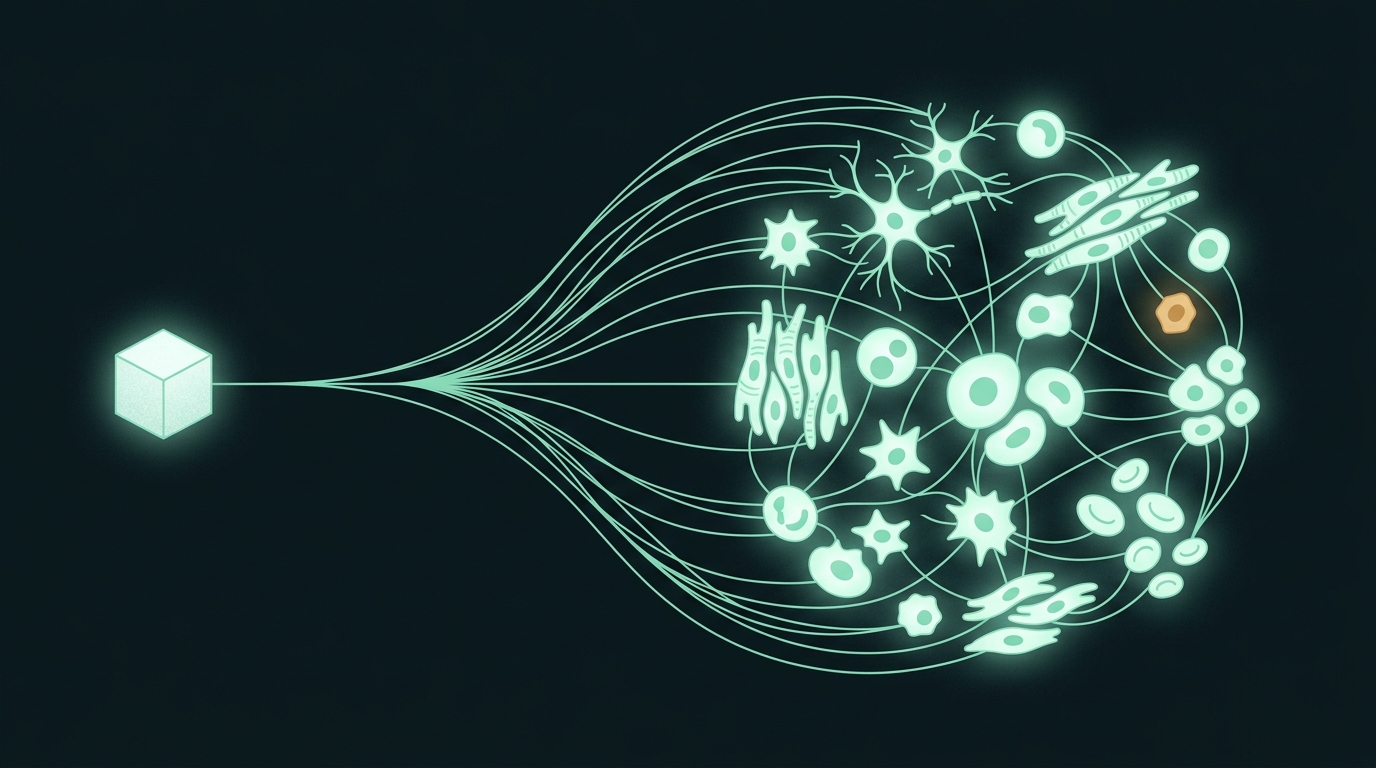
Your brain, your heart, your muscles, and your red blood cells all depend on glucose. Eating a piece of fruit doesn't send sugar to the tumour; it goes into the bloodstream, which supplies all your tissues. Your body also works hard to keep blood glucose within a steady range — whether you eat sugar or not, it can make glucose from other sources so that your vital organs keep working.
Cancer cells aren't only after sugar
Cancer Research UK points out that cancer cells also need lots of other nutrients, such as amino acids (the building blocks of protein) and fats. It isn't just sugar they crave, so there is no single "fuel" you can remove from your plate to switch a tumour off.
You can't starve cancer without starving yourself
In Cancer Research UK's words, there is currently no way of specifically starving cancer cells of glucose without harming healthy cells too. And there is no evidence that cutting sugar out of the diet improves the chances of surviving after a diagnosis.
The real (indirect) link between sugar and cancer
That doesn't mean sugar is irrelevant to cancer. The real connection is through body weight. Diets high in sugar — especially sugary drinks and sweets — make it easier to take in more calories than we need, and over years that can lead to weight gain. Being overweight or obese increases the risk of 13 different types of cancer, according to Cancer Research UK.
So, for cancer prevention and for long-term health after treatment, it is sensible to keep added sugar modest, as part of maintaining a healthy weight. Guidelines for cancer survivors, such as the American Cancer Society's, focus on exactly these big-picture factors — body weight, physical activity, overall diet, and alcohol — rather than on banning single foods.
During treatment, the priorities change
Here is the part that surprises many families: during active treatment, the bigger risk for most people is not eating too much sugar — it is not eating enough of anything. Treatment can cause poor appetite, taste changes, nausea, and mouth soreness. If someone also bans all sugar and carbohydrates, it becomes very hard to take in enough energy, and weight and muscle start to fall.
Cancer Research UK states plainly that there are no grounds for cancer patients to try to starve tumours by restricting their own diet during treatment, and that it could be dangerous to do so. European nutrition guidelines (ESPEN) similarly advise against diets that restrict energy intake in people who have, or are at risk of, malnutrition. And the US National Cancer Institute notes that people with cancer often need to follow diets that are different from what we usually think of as healthy — for example, more calories and protein when eating is difficult.
In practice, that can mean a dietitian adding foods that contain sugar — a milky drink, a nutritional supplement drink, yogurt, fruit, or a small dessert — because those calories help someone get through treatment without unplanned weight loss.
What about people with diabetes?
If you have diabetes, or if your treatment (for example, steroid medicines) raises your blood sugar, managing carbohydrates and blood glucose still matters — for your diabetes, not because sugar is feeding the cancer. Your oncology team, diabetes team, and dietitian can work together on a plan that keeps your sugar levels safe while making sure you still eat enough.
A practical, balanced approach
- Don't fear every spoonful. Normal amounts of fruit, grains, and the occasional sweet food are not "feeding" your cancer.
- During treatment, focus on enough. Enough energy and enough protein come first, especially if your appetite is poor or you are losing weight.
- After treatment, think long-term. Keeping added sugar and sugary drinks modest helps you maintain a healthy weight.
- Report weight loss. Unplanned weight loss during treatment should always be discussed with your team.
- Ask for a dietitian. A clinical dietitian can tailor advice to your cancer, treatment, and any diabetes.
This article is part of a series on cancer nutrition myths. Start with the overview, Eating Through Cancer: Separating Food Facts from Fiction, and see how appetite loss and other side effects are managed in Cancer Treatment Side Effects.
Does eating sugar make cancer grow faster?
There is no good evidence that the sugar you eat makes cancer grow faster. All cells in the body use glucose, cancer cells also use other nutrients such as amino acids and fats, and there is currently no way to starve cancer cells of glucose without harming healthy cells.
Why do PET scans use sugar if sugar doesn't feed cancer?
Many cancers take up glucose quickly, so a glucose-like tracer helps show where active cancer is. That shows how tumours behave; it does not mean that sugar in your diet is selectively feeding the tumour.
Should I follow a sugar-free diet during chemotherapy?
Not unless your own medical team advises it for a specific reason such as diabetes. Restricting your own diet during treatment can lead to weight and muscle loss and may be dangerous. A dietitian may even recommend sugar-containing foods to help you get enough calories.
Is there any link between sugar and cancer risk?
Yes, an indirect one. Diets high in sugar can contribute to weight gain, and being overweight or obese increases the risk of 13 types of cancer. Keeping added sugar modest is sensible over the long term.
Sources
- Cancer Research UK. Sugar and cancer – what you need to know (updated 16 August 2023). https://news.cancerresearchuk.org/2023/08/16/sugar-and-cancer-what-you-need-to-know/
- Arends J, et al. ESPEN guidelines on nutrition in cancer patients. Clin Nutr. 2017;36(1):11-48. doi:10.1016/j.clnu.2016.07.015
- National Cancer Institute. Nutrition During Cancer Treatment (PDQ®, patient version). https://www.cancer.gov/about-cancer/treatment/side-effects/appetite-loss/nutrition-pdq
- Rock CL, et al. American Cancer Society nutrition and physical activity guideline for cancer survivors. CA Cancer J Clin. 2022;72(3):230-262. doi:10.3322/caac.21719
Last reviewed: November 13, 2026
Medical guidance changes; check the latest official recommendations.
This website provides general educational information only. It is not medical advice, diagnosis, or treatment, and it does not create a doctor-patient relationship. Consult a qualified healthcare professional about your own condition. In an emergency, call 997.